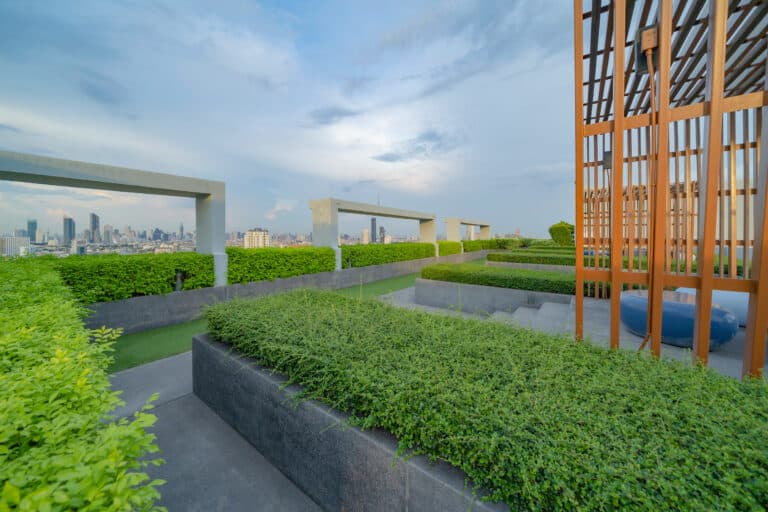
Green roofs have become an increasingly popular and effective solution for improving building performance, reducing urban heat island effects, and enhancing stormwater management.
When considering the addition of a green roof to an existing building, however, one fundamental question must be addressed: Can the existing structure safely support the additional loads?
The primary challenge lies in the building’s ability to support the new loads introduced by the green roof system. A vegetated roof adds significant permanent loads, including the growing medium, drainage and filtration layers, vegetation, and the water retained within the system.
Additional variable loads must also be considered, such as snow and rainfall, maintenance access, occupied roof areas or terraces, and temporary water accumulation.
These permanent loads can represent a substantial increase compared to those originally considered when the building was designed. For this reason, a thorough structural evaluation is often required during the early planning stages of the project.
This evaluation, which falls under the responsibility of a structural engineer, extends well beyond the roof framing itself. A rigorous structural assessment must examine the entire load path to verify that all structural components can safely transfer and resist the additional demands, all the way down to the foundations. Every link in the chain must be capable of supporting the new loads.
In existing buildings, this step is particularly important. Original drawings may be incomplete or inaccurate, materials may have deteriorated over time, and available reserve capacity is often limited.
Several technical considerations, sometimes underestimated, can have a major impact on structural behavior:
- Weight of the saturated growing medium, which is often the governing design condition
- Uneven load distribution, including planting zones, trees whose weight changes over time, rooftop equipment, and circulation areas
- Existing structural deflections, which may contribute to ponding water
- Poor drainage, potentially resulting in unintended load increases
- Combined snow and water loads, particularly critical in Canadian climates
- Anchorage requirements for lateral forces generated by planters and landscaping elements
These factors must be evaluated as part of an integrated analysis to prevent localized overstressing and operational issues.
What Are the Options If the Existing Capacity Is Insufficient?
Limited structural capacity does not necessarily mean a green roof project must be abandoned. Several solutions may be considered:
- Selecting a lighter green roof system, such as an extensive green roof
- Optimizing load distribution across the structure
- Adding or strengthening structural elements
- Restricting roof access to maintenance personnel only
The objective is to identify a safe, practical solution that is compatible with the existing building and economically viable for the owner.
The DPHV Approach: Practical and Tailored Support
At DPHV, our structural engineers support municipalities, property managers, architects, and professionals from a wide range of disciplines in evaluating the feasibility of integrating green roofs onto existing buildings.
Our approach includes:
- Assessing the load-bearing capacity of the existing structure
- Verifying applicable design loads based on the intended use
- Identifying constraints and potential risks
- Developing tailored solutions, including optimization and strengthening measures
- Ensuring seamless coordination with other disciplines
Drawing on more than 30 years of experience in existing buildings, rehabilitation projects, and asset management, we focus on practical solutions that are compatible with existing conditions and aligned with project objectives.
A green roof can provide significant environmental, operational, and aesthetic benefits. However, successfully integrating one onto an existing building requires a thorough and rigorous structural assessment.
Evaluating structural capacity early in the process not only helps ensure safety, but also improves project feasibility and allows costs to be optimized from the outset.